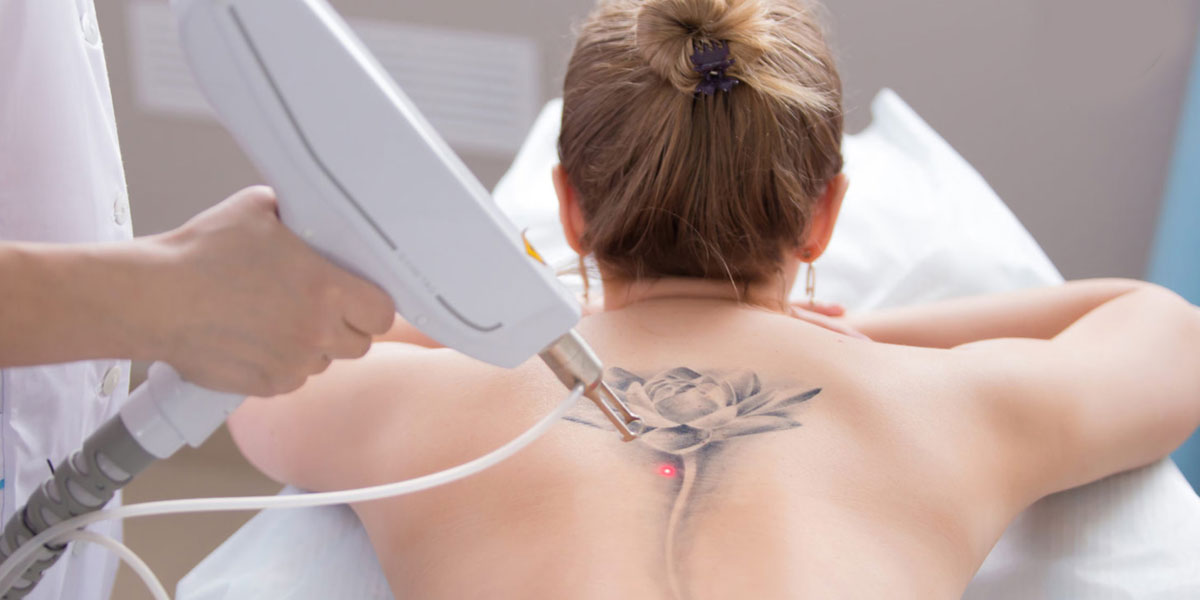
Tattoo Removal Treatment
“At Innovation Care, we are a leading clinic for Tattoo Removal Treatment in Baner, Pune.” Unwanted tattoos can become a concern when your preferences change, a tattoo no longer represents you, or you simply want clearer-looking skin. At Innovation Care, our Tattoo Removal Treatment in Baner is planned according to the tattoo's colour, size, depth, location and your individual skin type.
Laser tattoo removal works by delivering controlled laser energy to tattoo pigments, breaking the ink into smaller particles that can gradually be cleared by the body's natural processes. Since tattoo ink is deposited in layers and different colours respond differently to laser wavelengths, more than one treatment may be required for progressive fading. :contentReference[oaicite:1]{index=1}
Tattoo Removal Treatments We Offer
Our tattoo removal approach focuses on careful assessment and appropriate laser selection to help gradually reduce unwanted tattoo pigment while keeping skin safety in mind.

Black & Dark Tattoo Removal
Laser treatment can be used to target black and darker tattoo pigments. Treatment parameters are selected according to the tattoo and skin characteristics for controlled pigment reduction.

Colored Tattoo Removal
Different tattoo colours can respond differently to laser wavelengths. A personalized assessment helps determine the most suitable approach for coloured tattoo pigments.

Small & Minimal Tattoo Removal
Small tattoos, symbols, lettering and minimal designs can be evaluated for targeted laser treatment based on pigment depth, colour and location.

Partial Tattoo Fading
If you want to modify or cover an existing tattoo rather than remove it completely, laser treatment may be considered to gradually lighten selected areas.
Benefits of Tattoo Removal Treatment
Laser-based tattoo removal is widely used because it can selectively target tattoo pigments while allowing the surrounding skin to be assessed and treated with appropriate parameters. The outcome depends on several factors, including tattoo colour, ink depth, tattoo age, location and individual skin characteristics. :contentReference[oaicite:2]{index=2}
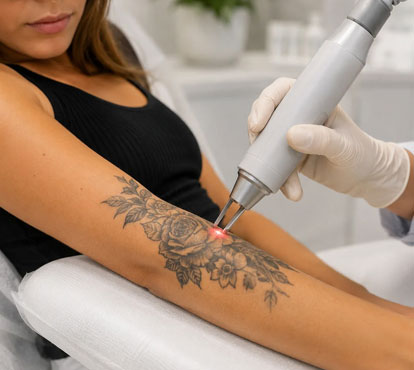

Gradual Reduction of Unwanted Tattoo Pigment
Laser treatment can progressively break down tattoo pigment, allowing the body to clear the fragmented ink over time.
- Personalized treatment based on tattoo characteristics
- Suitable laser approach selected according to pigment and skin type
- Can help fade tattoos for improved appearance or future cover-up
- Progressive improvement rather than aggressive one-time treatment
Tattoo removal usually requires patience because the laser breaks tattoo pigment into smaller particles, while the body gradually clears these particles. The number of treatments varies from person to person and cannot be accurately promised without examining the tattoo. :contentReference[oaicite:3]{index=3}
Temporary redness, swelling, tenderness and blistering can occur after laser tattoo removal. Pigmentary changes such as temporary lightening or darkening of the treated skin can also occur, particularly in skin of colour. Careful laser selection, conservative settings and proper aftercare can help reduce these risks. :contentReference[oaicite:4]{index=4}
For Indian and darker skin tones, treatment planning requires additional attention because epidermal melanin can increase the risk of post-inflammatory hyperpigmentation or hypopigmentation. A personalized assessment is therefore important before selecting laser settings. :contentReference[oaicite:5]{index=5}
Avoid DIY tattoo-removal creams, acids, salt-based methods and unqualified laser treatment. Such approaches may cause burns, infection, pigmentation changes or scarring. Professional evaluation is recommended for safer treatment planning. :contentReference[oaicite:6]{index=6}
Frequently asked questions
Find answers to common questions about Tattoo Removal Treatment in Baner, including treatment process, sessions, discomfort, tattoo colours and expected results.
Tattoo removal treatment uses controlled laser energy to target tattoo pigments. The pigment is broken into smaller particles, which are then gradually cleared by the body's natural processes. Different tattoos can respond differently depending on their colour, depth, size and other characteristics.
Laser tattoo removal can cause a snapping, stinging or uncomfortable sensation. The level of discomfort varies according to the tattoo and treatment area. Appropriate numbing or cooling measures may be considered to improve comfort during treatment.
The number of sessions varies considerably. Factors such as tattoo colour, ink density, depth, size, location, age of the tattoo and individual skin response can affect the treatment plan. A consultation is needed to provide a more realistic estimate rather than promising a fixed number of sessions.
Different tattoo pigments respond differently to laser wavelengths. Black and dark pigments are generally more responsive, while some colours can be more challenging. The exact response depends on the pigment composition and the laser technology used, so complete removal cannot be guaranteed for every tattoo.
Laser tattoo removal can be performed on darker skin types, but treatment requires careful assessment and appropriate settings. Skin of colour has a higher risk of pigmentary changes after certain laser treatments, so conservative treatment planning and proper aftercare are important.
Scarring is not the intended outcome of laser tattoo removal, but it can occur as a complication, particularly when treatment is performed incorrectly or the skin is not cared for properly. Choosing an appropriately trained professional and following aftercare instructions can help reduce unnecessary risks.
Recovery depends on the tattoo, treatment settings and individual skin response. Redness, swelling, tenderness or small blisters may occur after treatment and usually improve as the skin heals. Your treatment provider will give specific aftercare instructions based on the treated area.
Some tattoos can be significantly lightened or cleared, but complete removal cannot be guaranteed. The final result depends on factors such as tattoo colour, ink type, density, depth, location, skin type and individual response to treatment. A professional assessment can help set realistic expectations.

