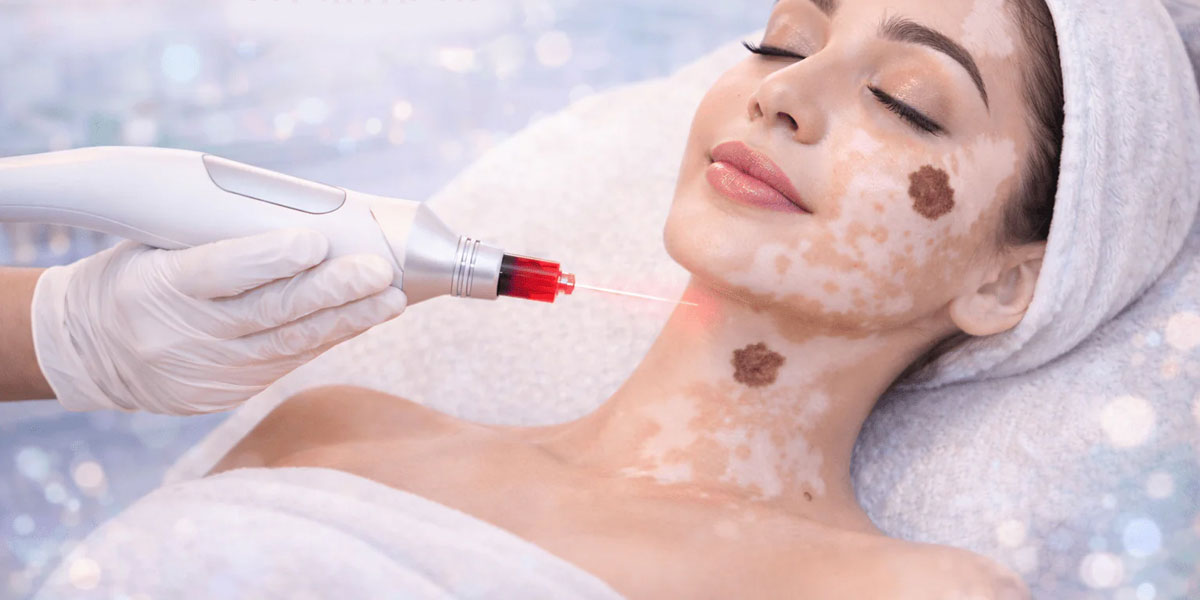
Vitiligo Treatment
“At Innovation Care, we are a leading clinic for Vitiligo Treatment in Baner, Pune.” Vitiligo is a skin condition in which the skin loses its natural colour, leading to lighter or white patches on different parts of the body. At Innovation Care, our Vitiligo Treatment in Baner focuses on accurate assessment of the condition and a personalized treatment plan based on the type, extent and activity of vitiligo.
Vitiligo is considered an autoimmune condition involving the pigment-producing melanocytes of the skin. Treatment aims may include restoring lost skin colour, slowing the development of new patches and maintaining repigmentation where possible. There is currently no single treatment that works for every person, and results can take time. :contentReference[oaicite:1]{index=1}
Vitiligo Treatments We Offer
Vitiligo treatment is selected according to the patient's age, skin type, location and size of patches, disease activity and overall treatment goals. Depending on the case, dermatological treatment may involve topical medicines, light-based therapy or other specialist approaches.

Topical Vitiligo Treatment
Prescription topical medicines may be recommended for selected patients to help restore pigmentation and manage localized vitiligo under professional supervision.

Phototherapy for Vitiligo
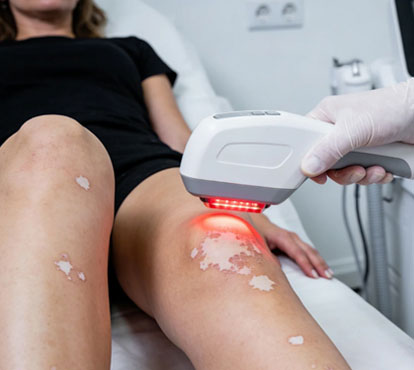
Controlled ultraviolet light treatment may be considered for suitable patients to stimulate repigmentation. Treatment frequency and light dose are determined according to individual skin response.

Targeted Light Treatment
For selected localized patches, targeted UVB or excimer-based treatment may be considered to focus treatment on affected areas while limiting exposure of surrounding skin.

Advanced Vitiligo Management
For stable or treatment-resistant cases, selected patients may be evaluated for advanced procedures or combination approaches depending on disease stability and clinical suitability.
Benefits of Vitiligo Treatment
The primary objective of vitiligo treatment is to help restore lost skin colour and, where appropriate, control the development of new patches. Treatment response varies significantly depending on the type and location of vitiligo. The face and neck often respond better than areas such as the hands and feet. :contentReference[oaicite:2]{index=2}

Personalized Vitiligo Care
Treatment is planned according to the type, location, extent and activity of vitiligo rather than using the same approach for every patient.
- Helps target areas affected by loss of skin colour
- May support gradual repigmentation in suitable patients
- Can help manage localized or more extensive vitiligo
- Personalized treatment based on disease activity and skin characteristics
Topical corticosteroids and calcineurin inhibitors are among the medical treatments used for vitiligo. The choice depends on factors such as the treatment area, age and clinical situation. Some topical medicines require limited-duration use or medical monitoring because of potential side effects. :contentReference[oaicite:3]{index=3}
Phototherapy uses controlled ultraviolet light to encourage repigmentation. Narrowband UVB and targeted treatments such as 308 nm excimer therapy may be considered in appropriate cases. Phototherapy generally requires multiple treatments and should be carefully dosed to avoid excessive irritation or burning. :contentReference[oaicite:4]{index=4}
Stable vitiligo that has not responded adequately to medical treatment may sometimes be evaluated for surgical repigmentation procedures, such as skin grafting or cell-based transplantation. These procedures are not suitable for everyone and are generally considered only after assessing disease stability and other factors. :contentReference[oaicite:5]{index=5}
Vitiligo-affected skin has less natural protection from ultraviolet radiation and can burn more easily. Regular sun protection is therefore an important part of vitiligo skin care. Treatment should focus on realistic improvement rather than promising a permanent cure, because repigmentation can fade over time. :contentReference[oaicite:6]{index=6}
Frequently asked questions
Find answers to common questions about Vitiligo Treatment in Baner, including causes, treatment options, phototherapy, repigmentation and expected results.
Vitiligo is a skin condition in which pigment-producing melanocytes are lost or damaged, resulting in lighter or white patches of skin. It is generally considered an autoimmune condition and can affect different parts of the body.
There is currently no guaranteed permanent cure for vitiligo. Available treatments can help restore skin colour, control disease activity or reduce the visibility of patches in suitable patients. Repigmentation can vary and may fade over time.
Treatment options may include prescription topical medicines, phototherapy, targeted UVB or excimer treatment and, in selected stable cases, surgical repigmentation procedures. The appropriate treatment depends on the type, extent, location and activity of vitiligo.
Phototherapy can help restore pigmentation in suitable patients with vitiligo, but the response varies between individuals. Several treatment sessions are usually required, and some body areas respond better than others. A dermatologist can determine whether phototherapy is appropriate for your condition.
The face and neck often respond better to repigmentation treatments than areas such as the fingertips, hands and feet. Response also depends on whether the vitiligo is active or stable and how long the patches have been present.
The number of treatments depends on the treatment method, size and location of patches, disease activity and individual response. Phototherapy, for example, usually involves repeated sessions over time. A fixed number of sessions cannot be guaranteed for every patient.
Vitiligo can remain localized in some people, while in others it may gradually spread or new patches may develop. The activity of the condition is an important factor when deciding on a treatment plan. Professional evaluation can help monitor changes over time.
Yes. Areas affected by vitiligo have less natural melanin protection and can burn more easily in sunlight. Regular broad-spectrum sunscreen, protective clothing and sensible sun protection are important parts of caring for vitiligo-affected skin.

